

International Conference “The Crucifixion of Orthodoxy in the 21st Century: Spiritual Wars, Ecumenical Offensive, and Global Politics”

International Conference “The Crucifixion of Orthodoxy in the 21st Century: Spiritual Wars, Ecumenical Offensive, and Global Politics”
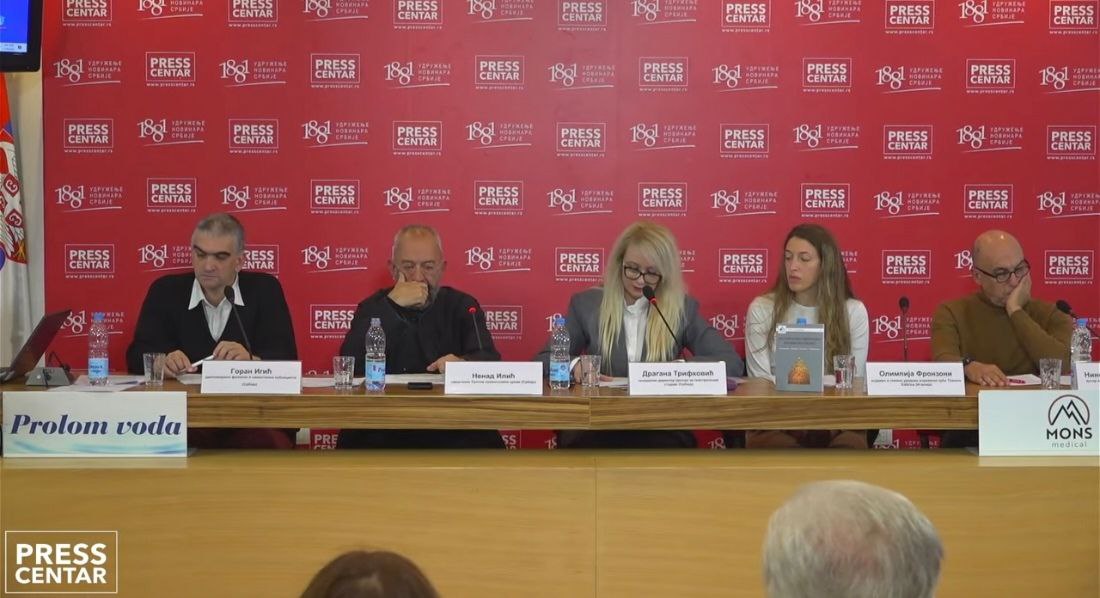
The Center for Geostrategic Studies in Belgrade continued its tradition of organizing gatherings dedicated to the preservation of spiritual and national identity. The International Conference entitled “The Crucifixion of Orthodoxy in the 21st Century: Spiritual Wars, Ecumenical Offensive, and Global Politics” was held in Belgrade on December 4, 2025, at the Press Center of the Association of Journalists of Serbia. This event, part of the cycle “Blocking the Aggression Against the Church”, focused on the growing geopolitical struggle that increasingly penetrates the spiritual sphere and uses religion as an instrument of political influence. The conference brought together representatives of the Church, experts, and international analysts from numerous countries to discuss contemporary threats to Orthodoxy and to develop strategies for safeguarding spiritual and canonical integrity.
At the beginning of the conference, participants and guests observed a moment of silence in honor of church historian and canon law scholar Professor Dr. Miodrag Petrović, one of the greatest Orthodox academics. During his lifetime, Professor Petrović prepared critical editions of important medieval documents, with particular significance attached to his translation and publication of Saint Sava’s Nomocanon into modern Serbian. He will be remembered as a steadfast guardian of tradition, ecclesiastical canon law, and the Orthodox faith.
Before the working sessions commenced, Dragana Trifković extended congratulations on the Feast of the Entry of the Most Holy Theotokos into the Temple to Hilandar Monastery on behalf of the organizers, all participants, and guests.
The conference was opened by guest speaker Olimpia Fronzoni from Italy, publisher and editor-in-chief of Theosis Editrice. In her presentation, she outlined the mission of Theosis Editrice, which continues the tradition of the journal Italia Ortodossa, aiming to affirm Orthodox theology in the Western context as the authentic truth of Christianity. She emphasized that, according to canonical tradition, Orthodoxy recognizes no papal primacy, but only a primacy of honor among equals, and that the unity of the Church rests on true faith rather than obedience to a “first.” It was pointed out that the actions of the Ecumenical Patriarchate regarding the Ukrainian issue contradict the canons of the Seventh Ecumenical Council, and that contemporary ecumenist tendencies undermine the traditionally exclusive Orthodox teaching. The “inclusive ecclesiology” of the Council of Crete was also criticized, as it acknowledges a certain degree of ecclesiality in other communities, which is assessed as a departure from the patristic tradition. The speech concluded with a call for cooperation with the Serbian Orthodox Church and for joint defense of the unchanged Orthodox faith.
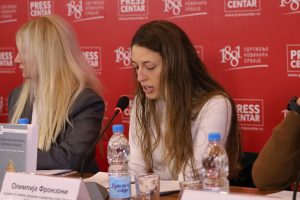
Photo: Olimpia Fronzoni
At the International Conference, a study excerpt by Athonite monks Paisios Kareotis and Epiphanios Kapsaliotis was presented, dedicated to a critical examination of the Ecumenical Movement. They pointed to the profound interdependence of theology, geopolitics, and cultural power, emphasizing that Orthodoxy is often treated as a structural obstacle to Western strategies. Highlighted was the role of organizations such as the YMCA and its connection with central economic and political hubs in shaping liberal ecumenical theology and global cultural influence. The monks recalled the Council of Orthodox Churches in Moscow in 1948, when it was clearly affirmed that Orthodoxy cannot be reduced to one denomination within the framework of the World Council of Churches. They also drew attention to the long-term consequences of gradual secularization and the political instrumentalization of religion, which continue to this day. The main message of the Athonite monks was that the preservation of Orthodox identity requires awareness of the forces shaping the contemporary Ecumenical Movement and protection of the canonical and spiritual integrity of the Church.
Metropolitan Luke of Zaporizhzhia and Melitopol, in his presentation entitled “The Ecumenist Offensive as an Instrument of Geopolitics: Media, Finances, and the Diplomacy of the Vatican and the Phanar,” warned that the ecumenist initiatives of the Vatican and the Phanar have evolved into instruments of global geopolitics, employing media, financial mechanisms, and diplomatic channels to influence the internal life of Orthodoxy. He stressed that such projects dismantle canonical order, the unity of the Church, and the trust of the faithful. The Metropolitan provided detailed insights into the role of media campaigns in legitimizing non-canonical structures, as well as the involvement of Western political actors in religious processes, particularly evident in the Ukrainian case. As a key task, he identified the need for systemic resistance to these phenomena through a counter-narrative in the media, strengthening social programs, theological and spiritual consolidation, and pan-Orthodox solidarity. Metropolitan Luke also proposed the establishment of new analytical structures within the Center for Geostrategic Studies in Belgrade, which would monitor ecumenist and geopolitical threats and serve as the foundation for a long-term strategy to preserve Orthodox canonical unity.
Greek theologian and journalist Georgios Tramboulis, director of Orthodoxos Typos, in his presentation entitled “The Ecumenical Patriarchate under the Complete Control of American Diplomacy,” addressed the historical and contemporary role of American religious diplomacy in shaping the Orthodox world, emphasizing that since World War II the United States has sought to influence internal processes in Orthodoxy through the Ecumenical Patriarchate. Through historical examples, including the enthronement of Patriarch Athenagoras and analysis of CIA documents, Tramboulis demonstrated that the Ecumenical Patriarchate gradually became an instrument of Western politics and a key partner of American interests. He particularly stressed that modernization and secularization of the Phanar began during Athenagoras’ tenure and reached their peak under Patriarch Bartholomew, leading to profound disruptions in Orthodox unity. Tramboulis warned that today’s policies of the Ecumenical Patriarchate are steering toward the “Vaticanization” of the East and undermining the conciliarity of the Orthodox Church. He called for a return to Tradition and liberation of the Patriarchate from external political influences as a prerequisite for restoring unity and fidelity to the patristic heritage.
Nenad Ilić, priest of the Serbian Orthodox Church, delivered a presentation entitled “Temptations and Tasks of the Church Today.” In his address, he emphasized that contemporary technological trends—particularly the idea of merging man and machine to achieve virtual “immortality”—represent a great temptation for humanity and a blow to genuine spiritual connectedness. The Orthodox Church, as the guardian of the mystery of the God-man and of the possibility of union between man and God, faces the challenge of replacing living spirituality with virtual, technologically mediated forms of religious experience. The speaker particularly noted that the COVID-19 pandemic revealed the breadth of this problem, as fear and the media model of “virtual services” endangered the sense of holiness and the uniqueness of the Eucharist. He also pointed out that state influences, the historical legacy of communism, and the weakening of conciliarity contribute to the internal weaknesses of the Church, creating space for pressures, manipulations, and dangerous compromises, including ecumenist ones. He warned that the people, if not liturgically and spiritually educated, easily become targets of deception, preserving form without substance. The central message of his speech was that the battle to preserve the mystery of Orthodoxy—the mystery of the living union of man with God—is decisive in an age of technological totalitarianism and spiritual temptations.
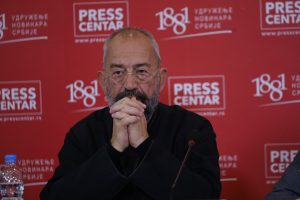
Photo: Father Nenad Ilić
Dragana Trifković, General Director of the Center for Geostrategic Studies, presented on the topic “The Spiritual Front: Geopolitical Challenges of Orthodoxy in the Contemporary World.” She emphasized that Orthodoxy is facing systematic attacks through the “spiritual front,” which encompasses political, cultural, and informational mechanisms of destabilization. “The Western liberal-globalist bloc, including the USA, NATO, and the EU, perceives Orthodoxy as a civilizationally irreconcilable model and uses ecumenist initiatives to promote geopolitical interests. The visit of Patriarch Bartholomew to the USA and his meeting with Pope Leo XIV demonstrate that spiritual titles are being used as access points to political and financial resources, which calls into question the authenticity of spiritual service,” Trifković stated. She particularly highlighted the risk of instrumentalizing religion in the creation of “proxy” churches as a means of controlling Orthodox communities. The absence of other Orthodox patriarchs from the 1700th anniversary of the First Ecumenical Council, according to Trifković, illustrates the limited capacity of Phanariot attempts to present pan-Christian unity. She concluded that true Orthodox unity is possible only through a return to tradition, conciliarity, and canonical strictness, and not through external geopolitical maneuvers.
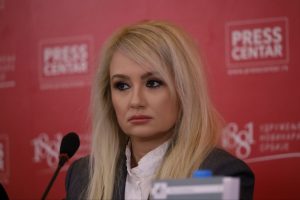
Photo: Dragana Trifković
Ninoslav Ranđelović, author and producer, in his presentation entitled “Culturocide in Kosovo and Metohija: The Destruction of Serbian Cultural and Spiritual Heritage – A Unique Video Document,” presented his video documentation of the systematic destruction of Serbian cultural and spiritual heritage in Kosovo and Metohija, a process ongoing for 26 years. He emphasized that this “culturocide” represents an attempt to erase the centuries-long presence of the Serbian people, unfolding despite the presence of international institutions and the evident inability of Kosovo’s authorities to protect the sacred sites. Ranđelović stressed that to this day no comprehensive record exists documenting all the destroyed and desecrated Orthodox sanctuaries, and that his video materials often serve as the only available testimony. He warned that neither Serbian state institutions nor the Serbian Orthodox Church have supported the initiative to systematically document this devastation, which further deepens the problem. In his address, he appealed to the public and the Serbian diaspora to assist in financing a complete documentary archive that would be presented to the global audience. Ranđelović believes that the existence of such a record would encourage the search for a truly civilizational solution for Kosovo and Metohija.
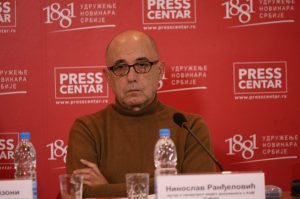
Photo: Ninoslav Ranđelović
Niccolò Gigli, philologist and doctoral researcher from Italy, spoke on the topic “Orthodox Theology on the Boundaries of the Church and the Sacraments and Its Alteration by Ecumenists,” noting the violation of Orthodox teaching on the boundaries of the Church and the sacraments by contemporary ecumenists. He pointed out that ecumenist movements as early as the 1920s abandoned the traditional Orthodox understanding of the Church, recognizing heretical baptisms as valid and introducing a new so-called “baptismal theology.” According to him, this approach contradicts the teaching of the Holy Fathers, who emphasized that outside the Church there is no true grace nor sacraments. Gigli warned that these innovations represent an attempt to create false unity with heresies and called for the preservation of faithful Orthodox tradition.
Goran Igić, philologist and independent publicist, spoke on the topic “The Resistance of the Bulgarian Orthodox Church to External Phanariot Pressures and Schismatic Attempts.” He emphasized that the Bulgarian Orthodox Church (BOC) has successfully resisted external Phanariot pressures and political attempts to draw it closer to the Patriarchate of Constantinople and non-canonical formations in the region. “Historical and geopolitical factors, as well as inherited schisms, have shaped the awareness of Orthodox Bulgarians regarding the importance of autocephaly and conciliarity. The Synod of the BOC, led by Patriarch Daniel, consistently defends dogmatic and canonical correctness, stressing that the Council of Crete in 2016 did not represent universal ecumenical unity. This position demonstrates the BOC’s desire to preserve Orthodox unity, independence, and religious tradition in the context of contemporary geopolitical challenges,” Igić stated.
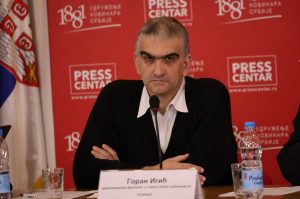
Photo: Goran Igić
Father Jovan Plamenac, priest of the Serbian Orthodox Church, in his presentation entitled “Personal Freedom as the Defender of the Earthly Church,” emphasized that modern man is under pressure from globalist ideologies which relativize truth, undermine the traditional moral order, and erode the foundations of family, identity, and historical memory. In such an environment, he stressed, personal freedom becomes the key safeguard of both man and the earthly Church, for through freedom man participates in God’s love and preserves the dignity of his God-like being. Father Jovan pointed out that the history of the Church has from its very beginnings been marked by external persecutions, but that today the most dangerous assaults are those coming from within—through heresies, immorality, abuse of authority, and attempts by secular structures to influence ecclesiastical decisions. The contemporary “viruses” of hedonism, utilitarianism, relativism, and technocratic ideologies, he noted, weaken faith by reducing it to theory, while spiritual practice is pushed aside. He also warned of the danger posed by the servility of certain parts of the Church hierarchy toward political centers of power, which exposes the faithful to new forms of persecution. His concluding message was that the Church can only be defended by a person who is truly personally free—one who does not understand freedom as the right to do anything, but as a God-given capacity to remain faithful to truth, love, and tradition.
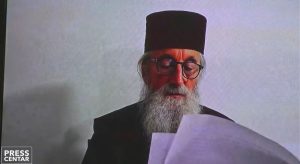
Photo: Father Jovan Plamenac
Georgios Karalis, disciple of Romanides and one of the leading contemporary patrologists, in his presentation entitled “Ecclesiology of Communion: A Post-Patristic Construction,” stressed that the modern “ecclesiology of communion” represents a post-patristic construct that departs from the teaching of the Holy Fathers. He emphasized that the Fathers clearly distinguish between essence and hypostasis, as well as between essence and energy, whereas contemporary ecumenist approaches often confuse these categories. Karalis reminded that God’s essence is inaccessible, while His energies are communicable, and that salvation is not juridical justification but real participation in the uncreated life of God through deifying energy. The main message of his presentation was that any confusion between person and essence leads to heresy, while Orthodox tradition preserves the unity of the Divinity and the distinctness of the Persons through their incommunicable hypostatic properties. Karalis concluded that theological innovations which Constantinople justifies as “tradition” in fact lack grounding in the patristic corpus and lead to the construction of a new, rather than traditional, ecclesiology.
Miladin Mitrović, priest of the Serbian Orthodox Church and rector of the Church of St. Basil of Ostrog in Banja Luka, authored a paper entitled “From the Schism in Ukraine to Unity with the Roman Pope,” which was presented at the conference by Dane Čanković, president of the association “Izbor je naš”. The paper stated that the visit of Pope Leo XIV to Turkey and the commemoration of the 1700th anniversary of the First Ecumenical Council became an occasion for new divisions within the Orthodox world, particularly due to Patriarch Bartholomew’s efforts to present this event as a step toward unity with the Vatican. “The attempt of the Patriarch of Constantinople to impose himself as the central figure of Orthodoxy remained without broader support, as the Patriarchs of Jerusalem and Antioch refused to participate, while Pope Leo XIV maintained a reserved stance toward his initiatives. Instead of the expected triumph, the meeting at the Phanar revealed deep mistrust and the limited support Bartholomew enjoys among the local Churches, especially after the schism in Ukraine,” emphasized Father Miladin. It was particularly stressed that the crisis within global Orthodoxy is deepening and that urgent conciliar action of all Churches is necessary. As a key proposal, the initiative was highlighted that the Patriarch of Jerusalem should assume the role of unifier in the process of overcoming the present divisions.
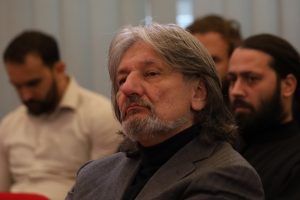
Photo: Dane Čanković
Teodora Ćitić, Master of Public Relations and international journalist, in her presentation entitled “The Church as a Living Organism of Unity: Dogmatic Truth from the Apostles to the Ecumenical Councils,” emphasized that the Church is a living, indivisible organism founded on the unity of the Holy Trinity, as confirmed by the Holy Fathers and the Ecumenical Councils. She stressed that dogmatic truth is the foundation of conciliarity and spiritual life, and that any deviation from it leads to schism and secularization of the Church. She particularly warned that contemporary challenges demand the preservation of faith, repentance, and a return to the original tradition.
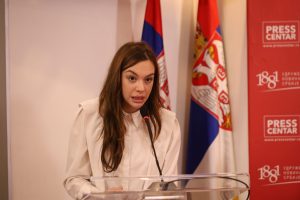
Photo: Teodora Ćitić
Vassilios Touloumtzis, Greek dogmatic theologian (PhD), presented at the conference his paper entitled “Autocephaly and Schism: The Crisis of Orthodox Ecclesiology in Addressing the Ukrainian Case,” in which he pointed to the deep crisis of Orthodox ecclesiology regarding the Ukrainian issue. The author emphasized that the essence of the problem is not only the Tomos of autocephaly, but also the absence of canonical priesthood among those who received it, which leads to a deepening of the schism. It was noted that instead of a conciliar approach, unilateral decisions of the Ecumenical Patriarchate are being applied, accompanied by erroneous interpretations of canons and historical events. The paper stressed that such practice has no foundation in Orthodox tradition, but rather bears the marks of Vatican ecclesiology of primacy, representing a dangerous precedent for the future of Orthodoxy.
Konrad Rekas, geopolitical analyst and journalist from Poland, delivered a presentation on the topic “Uniatism as a Weapon Against Orthodoxy and a Factor in the War in Ukraine.” He emphasized that Uniate structures, since the Florentine and Brest Unions, have represented a mechanism for weakening Orthodoxy, used for the geopolitical purposes of great powers. Rekas recalled that the Ukrainian Greek Catholic Church has historically been associated with ethnonationalism and cooperation with foreign centers of power, leaving deep consequences in the region. He particularly pointed to the forthcoming canonization of Andrey Sheptytsky, which he assessed as a signal that the Vatican has not abandoned its proselytist ambitions in the East. According to him, the continuity of Western policies directed against Orthodoxy is evident in contemporary crises, including the war in Ukraine.
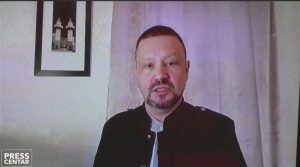
Photo: Konrad Rekas
In the closing part, the organizers of the conference expressed gratitude to all participants and guests, and issued a call to the public to actively engage in the defense of the unity of Orthodoxy.
Source: Center for Geostrategic Studies
