

Europe and Geopolitical Transformations — Strategic Repositioning as an Alternative to Processes of Degradation

By Dragana Trifković, General Director, Center for Geostrategic Studies
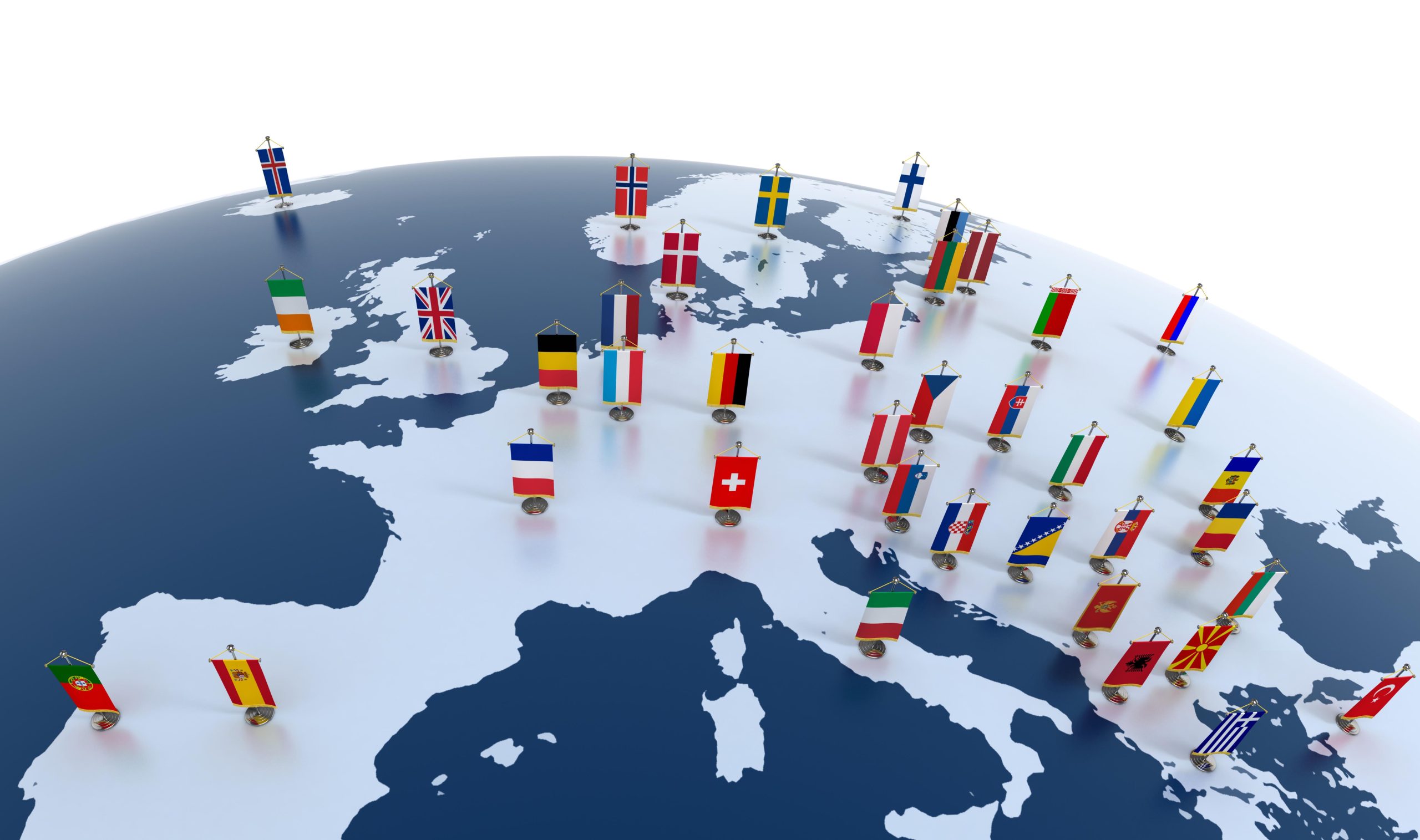
The geopolitical conflict between Europe and Russia, manifested through Brussels’ confrontational and disciplinary policy toward Moscow, has led to systemic destabilization across the continent. This is reflected in political instability, the deepening of the economic crisis and deindustrialization accompanied by social tensions, the accelerated erosion of democratic institutions, and the decline of citizens’ trust in the system.
Political Dependence as the Cause of the Legitimacy Crisis in the European Union
For the political elites in Brussels, systemic destabilization has emerged as an unexpected outcome of the measures undertaken against Moscow, despite numerous warnings from independent analysts that such a trajectory was highly probable. This fact underscores the limited capacity of contemporary European political elites to adopt realistic geopolitical assessments, a limitation largely stemming from their political dependence and lack of strategic autonomy. The adoption of a realistic geopolitical perspective, grounded in the realities of international relations, requires reliance on objective analyses of geopolitical processes. In contrast, the decisions of the European bureaucracy have been driven by ideological convictions, short-term political interests, and external pressures—primarily from the United States and various corporate and financial lobbies.
The problem, therefore, is not confined merely to a lack of expertise, but more fundamentally to the moral and political dependence of contemporary European leaders. Many have failed to demonstrate sufficient personal and institutional independence to defend the authentic interests of their states and citizens. Consequently, the European political elites exhibit a limited capacity to confront internal challenges and to take steps toward restoring public trust. This deepens the institutional and normative crisis within the European Union, which some authors describe as a process of Europe’s “collective Weimarization”—a gradual erosion of democratic legitimacy and social cohesion under conditions of growing distrust and instability. It is, of course, evident that Europe is neither homogeneous nor unified, and that within the framework imposed by the EU there are member states whose leaders openly oppose Brussels’ misguided decisions.
The Path to Europe’s Renewal: Formation of New Elites and the Development of an Authentic Strategic Culture
In order to halt processes of degradation and avoid conflicts within Europe, a gradual, inclusive, and diplomatically grounded approach to the transformation of European politics is essential. Central to this transformation is the role of authentic European elites capable of initiating internal systemic reform, which would simultaneously correspond to the requirements of strategic repositioning. In essence, this would mean that Europe must once again become a subject rather than an object of global politics—a goal achievable only through reform of the mechanisms by which elites are formed and decisions are made.
The prerequisite for such reform lies in strengthening the intellectual and institutional foundations of new political elites, endowed with the capacity to act beyond narrow partisan and ideological frameworks, while fostering an authentic European strategic culture. Reforms in education systems and public policy could generate a new generation of experts and politicians who understand geopolitical processes, history, and Europe’s genuine interests. This requires a greater role for academic institutes, research centers, and think-tank organizations that cultivate a European rather than an Atlanticist worldview, avoiding reliance on externally imposed ideological or narrative models.
For the development of an authentic European strategic culture, it is necessary that Europe establish its own mode of thinking about security, economics, and international relations, independent of American or other external models. This can be achieved through the creation of European strategic documents, authentic institutes of geopolitics, and joint programs for the education of political cadres. In this way, future generations of political elites would acquire the ability to think in statesmanlike rather than partisan terms, representing the genuine interests of their citizens. Decisions would thus be made not according to party interests or political gains, but in line with the long-term strategic interests of Europe as a continent. Gradually, this would also lead to changes in the functioning of institutions, increasing accountability, transparency, and democratic legitimacy, while simultaneously reducing the influence of bureaucratic and lobbying structures that currently shape decisions behind closed doors.
A New Model of European Governance: From Centralization to Regional Cooperation and Subsidiarity
Systematic decentralization and regionalization of governance represent key prerequisites for the renewal of democratic legitimacy and the functionality of European institutions. Transitioning from a centralized to a regionally coordinated model enables political decisions to be made closer to citizens, thereby enhancing transparency, accountability, and trust in institutions. This model ensures greater democratic oversight, as local and regional actors are better acquainted with the specific needs of their communities, adapting public policies to the economic and social conditions of each region. In this way, the effectiveness of public services is increased and local development stimulated, while simultaneously reducing the sense of domination by centralized structures and alleviating tensions among member states.
Decentralization as a Long-Term Systemic Process
Decentralization must not be confined to a mere political act, but rather pursued as a long-term systemic process. Public policies should serve as instruments for the gradual construction of a new governance model based on regional cooperation, economic complementarity, and cultural diversity. Of particular importance is the encouragement of interregional cooperation in areas of public significance—such as infrastructure, energy, education, healthcare, and security—as well as the affirmation of regional identities within the broader European framework. Such an approach enables the harmonization of diverse interests and transforms cultural and economic diversity into an advantage rather than a source of conflict.
In practical terms, this implies the development of a functional multipolar governance model within Europe, founded on the principles of equality, subsidiarity, and democracy. Such a model would allow Europe to act as a stable and responsible pillar of global balance, capable of safeguarding the interests of its citizens and establishing equitable dialogue with all key international actors. The introduction of this model would also facilitate a peaceful evolution toward multipolarity, reduce the risks of internal and external conflicts, and strengthen Europe’s strategic autonomy—ensuring that it becomes neither an instrument nor a counterweight to any global power, but rather an independent and stable factor in international relations.
Conclusion
According to the findings of the Munich Security Report 2025, the world is undergoing a profound transformation—from American unipolarity toward a multipolar order in which developing states and rising powers increasingly take the initiative in addressing global challenges. This shift requires Europe to reassess its current position and abandon the policy of unilateralism that has long relegated it to the periphery of American strategy.
Europe can become a relevant and stable component of the emerging world order only if it strengthens its strategic autonomy and develops the capacity to maintain balance in its relations with all major powers. A sound geopolitical orientation must be grounded in pragmatism, equilibrium, and a realistic appraisal of the interests of European peoples, rather than in ideological or bloc-based divisions.
It is particularly important that Europe cultivate internal stability through decentralization and regionalization—bringing political responsibility closer to citizens, reducing external pressures, and preventing internal conflicts that threaten to lead to a process of “collective Weimarization.”
The future of European security depends on the ability to establish genuine dialogue between the West, Russia, and China—based on mutual respect, compromise, and recognition of the legitimate interests of all parties.