

Dragana Trifkovic: The Balkans between multipolarity and conflict: scenarios of geopolitical restructuring


A stronger, more interconnected Balkan region based on production links, trade, and shared development goals was the key message of the Second International Conference “The Balkans – for Peace, Security, Cooperation and Partnership”, held in Sofia. The two-day forum brought together policymakers, economists, and experts to discuss regional cooperation, connectivity, and EU integration.
The conference was opened by Deputy Prime Minister Atanas Zafirov and Economy and Industry Minister Peter Dilov, and was organized by the Ministry of Economy and Industry, the Strategic Institute for National Policies and Ideas (SINPI), the Forum for Balkan Transport and Infrastructure (FBTI), and the National Association for International Relations (NAIR).
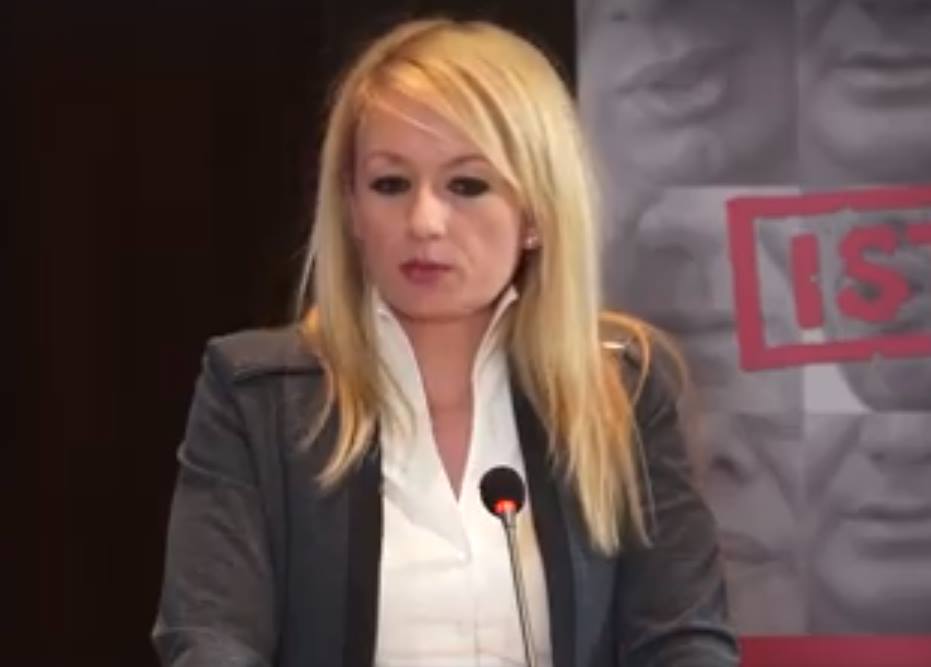
One of the speakers at Panel I – Geopolitics and Perspectives for the Balkans and the Four Seas Region (Black, Aegean, Ionian, and Adriatic Seas) – addressing regional challenges and opportunities in the current global context was Dragana Trifković, General Director of the Center for Geostrategic Studies from Serbia, whose speech we present in full.

Dragana Trifkovic: The Balkans between multipolarity and conflict: scenarios of geopolitical restructuring
Strengthening of multipolarity and the rise of alternative global alliances
In recent years, the global geopolitical landscape has been marked by the strengthening of major blocs and alliances beyond Western dominance. A key factor accompanying this trend is the shift in economic power toward developing countries.
According to the Munich Security Report 2025, the economic weight of developing and emerging nations is steadily increasing. The report concludes: “The global order is shifting from US-led unipolarity toward multipolarity as American hegemony declines. New emerging powers are becoming increasingly influential in addressing key global issues. BRICS countries account for a significant share of global trade and energy production,” states the 151-page document published by the Munich Security Conference.
The growing role of BRICS — now expanding to include new members such as Saudi Arabia, Iran, Egypt, the UAE, and Ethiopia — aligns with demands for greater economic and political autonomy.
The Shanghai Cooperation Organization (SCO) is also playing a more active role, seeking to expand its sphere of influence through enhanced cooperation in security, economics, and technology among its member states.
Unipolar resistance and the legitimacy crisis of Western power structures
Centers of power in the West — including the United States, the European Union, the United Kingdom, and their allies within NATO and the G7 — employ various mechanisms to slow down or weaken the global shift toward multipolarity.
On the economic front, this is reflected in the use of sanctions against countries that challenge Western dominance, such as Russia, Iran, Venezuela, Cuba, and others. Additionally, Western power centers establish free trade zones and economic blocs where they dictate the rules of engagement.
In geopolitical and military terms, they pursue this strategy through NATO expansion, the proliferation of military bases, direct interventions, and regime change operations. Through information control and media influence, they shape global narratives that portray states striving for greater autonomy as threats.
Institutional power and international organizations are often misused to obstruct reform efforts. Particularly alarming is the use of terrorism as a tool of geopolitical confrontation, exemplified by the sabotage of the Nord Stream gas pipeline.
The disregard for international law by Western actors, coupled with rising competition, is leading to ambiguous norms and the potential outbreak of new conflicts.
Geopolitical scenarios for the Balkans under conditions of multipolarization
It is essential to understand what different geopolitical scenarios offer us.
The EU and NATO, which represent the strategic framework of Brussels–Washington alignment, impose political, security, and economic dependence that excludes the development of sovereignty. Washington’s policy is increasingly diverging from the framework of Euro-Atlantic partnership in favor of protecting its own state and national interests, which weakens and degrades the position of its European allies.
The position of the Balkans — which the EU perceives as a periphery — becomes even more vulnerable under such circumstances. With continued Euro-Atlantic integration and limited economic development dependent on Western investments and funds, the Balkans loses the opportunity to improve its standing through the process of multipolarization.
As a result, the region assumes the role of a “border zone” toward Russia, China, and Turkey, which carries inherent risks in the event of confrontation. The current situation in Europe, marked by accelerated militarization and confrontational policies, is undoubtedly leading toward conflict escalation — the worst possible outcome for Europe.
The dominant role of the EU and NATO in the Balkans also implies the continuation of limited sovereignty, population outflow, and cultural and political marginalization.
Balancing between centers of power is a policy that can mitigate the negative consequences of unilateral approaches. This would entail that Balkan states continue cooperation with the West while simultaneously developing partnerships with other global power centers such as China, Russia, Turkey, and others. Unfortunately, under current circumstances, this is nearly unfeasible due to the constraints imposed by Washington and Brussels.
Deeper mutual cooperation among Balkan states through regionalization may represent the most viable solution in the present context. Such an approach would enhance the region’s relevance within the EU, countering its marginalization. Moreover, it would allow the Balkans to position itself as a distinct actor not exclusively subordinated to any global center, thereby gaining strategic advantage in the process of multipolarization.
The key is that new initiatives must emerge as authentic expressions of regional needs and multipolar opportunities, rather than externally imposed projects such as “Open Balkan.” A fundamental prerequisite is the reduction of influence from oligarchic structures and foreign funds that impose their agendas, and a stronger reliance on shared interests among the peoples of the region in areas such as economy, energy, security, and culture.
The Balkan initiative for cooperation and development should be launched by regional states as a multidirectional framework focused on concrete projects that deliver direct benefits to the population. This could be based on the stimulation of joint production chains using new technologies, as well as the construction of essential infrastructure.
In the security context, there is a growing need to establish a Balkan Council for Security and Crisis Response as a mechanism to counter external pressures and destabilization attempts. It would also be highly important to foster scientific and cultural cooperation, which could be initiated by civil society organizations.
Conclusion
Western attempts to preserve the unipolar order through military alliances, sanctions, and institutional mechanisms are showing limited effectiveness. The world is moving toward multipolarity, in which emerging alliances such as BRICS and the Shanghai Cooperation Organization (SCO) are assuming increasingly significant roles.
Under current circumstances, the Balkans faces a choice: either to remain in a peripheral position within the EU, with the risk of being drawn into conflicts, or to strengthen itself through autonomous regional initiatives — thereby gaining strategic advantage in the process of multipolarization.